Kestrel Airspace Command and Control Suite

Next-Gen-Ready Airspace Control and Aviation Mission Planning Solution
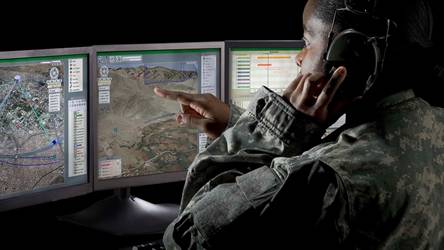
The Kestrel Airspace Command and Control software capability delivers services and user workflows to meet the U.S. Armed Force’s Next-Gen-C2 airspace and mission planning command and control needs. Kestrel is a hardware agnostic, containerized software solution for simple integration into larger cloud-based capabilities or organically run in isolation on unit provided hardware.

Features
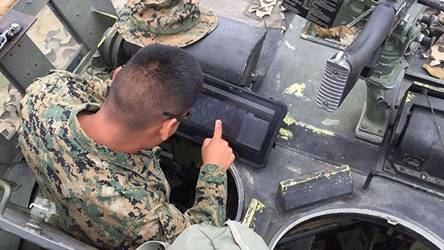
Kestrel broadly supports aviation operations across Cloud, Command Post, Mobile/Handheld, and Mounted Computing Environments, including the Aviation Mission Command Server (AMCS) on Aviation platforms and CMOSS Mounted Form Factor (CMFF) on Ground platforms. Kestrel delivers cognitive-burden reducing artificial intelligence powered decision aids enabling automated operational feedback to the edge, planning accelerators like automated hazard-avoidance aviation mission route pathfinding, and predictive conflict identification and resolution. Key features include:
- Next-Gen-C2-ready container-based cloud and on-prem deployment
- High-performance browser-accessed rolebased user workflows and 4D Visualization
- Robust airspace control and aviation mission planning and execution capabilities delivered from Cloud to Edge with broad Army, Joint and partner nation interoperability
- AI-enabled aircraft prediction, route planning, and dynamic conflict identification.
- Aircraft situational awareness supported by modern tactical links, standards, and ATC radars

Airspace Control
Kestrel’s airspace control capabilities provide best-in-class capabilities for creating, analyzing, managing and communicating complex airspace usage through a fully 3D browser-accessed web application.
- Full 4D airspace control planning and execution capabilities aligning with emerging aviation critical needs
- Streamlined and automated airspace clearance processing via tight integration with Warfighter domain specific systems
- Edge-to-CP automated evaluation and alerting supporting small UAS airspace usage
- Comprehensive airspace C2 interoperability with joint and partner nation tactical systems via published standards: CoT, USMTF, VMF, ADATP3, ASCA, KML, and Geopackage
- Interoperability with proprietary interfaces and systems: Anduril Lattice, Palantir Gaia, CPCE SitaWare, and IBCS
- Current and predictive conflict analysis of airspace usage

Aviation Mission Planning
Kestrel’s aviation mission planning capabilities deliver high quality visualization and analysis capabilities.
- Analyzes multidomain effects and enemy threats from Brigade to Company level to preserve combat power and enhance maneuver
- Fuses intelligence, terrain, weather, and threat data for high-fidelity mission planning and rehearsal, ensuring effective aviation operations
- Enhances synchronization across air and ground forces, reducing risks and improving unit maneuverability
- Enables digital fly-throughs, airspace synchronization, and real-time updates for joint and coalition operations, enhancing mission rehearsal and coordination
- Produces mission briefs, overlays, and exportable data for both planning and real-time execution support, providing comprehensive digital planning products
- Interoperable with current force planning tools such as AMPS for rotary wing and UAS platforms
- Predictive situational awareness for aircraft - One-click conversion of mission plans to airspace requests

Shared Common Operational Picture (COP)
Kestrel’s Rotary Wing Rehearsal Tool brings dynamics fusion of tactical data to a high-quality, lightweight briefing and rehearsal capability
- Shared COP via COE compliant data sharing with Army, Joint and partner nation tactical systems and sensors
- Fight tonight TAK integration, NGC2 integration ready
- Dynamic synchronization of airspace changes with participating tactical system
- Combined COP for airspace manager, mission planner, and airspace requestor roles
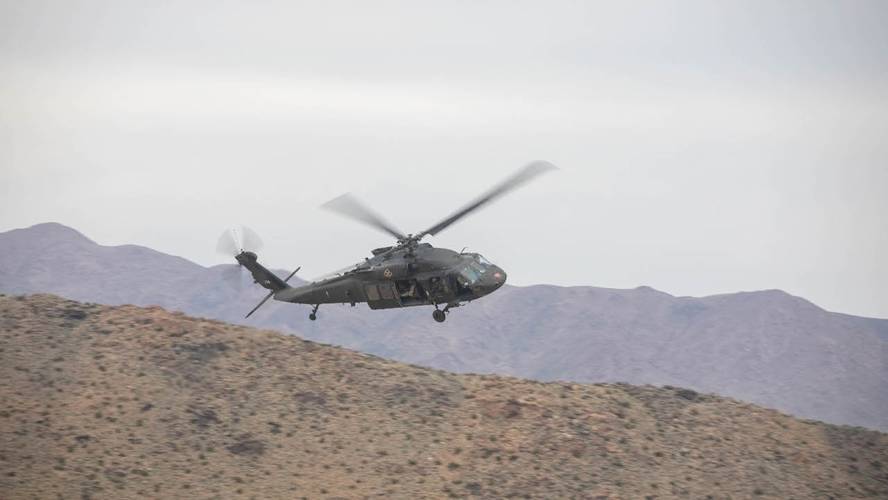
Successful demonstration of the IMPACT Mission Planning System by the U.S. Army
The U.S. Army evaluated the IMPACT system at the National Training Center at Ft. Irwin and Camp Pendleton as part of an annual Joint and Coalition large-scale experiment.